A Long Rainy Season: From the Field at JLM
Stories from the Field · July 29, 2026 · 3 min read
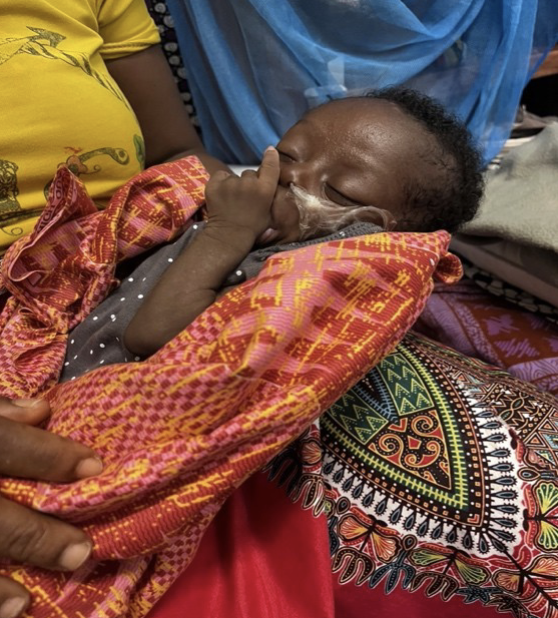
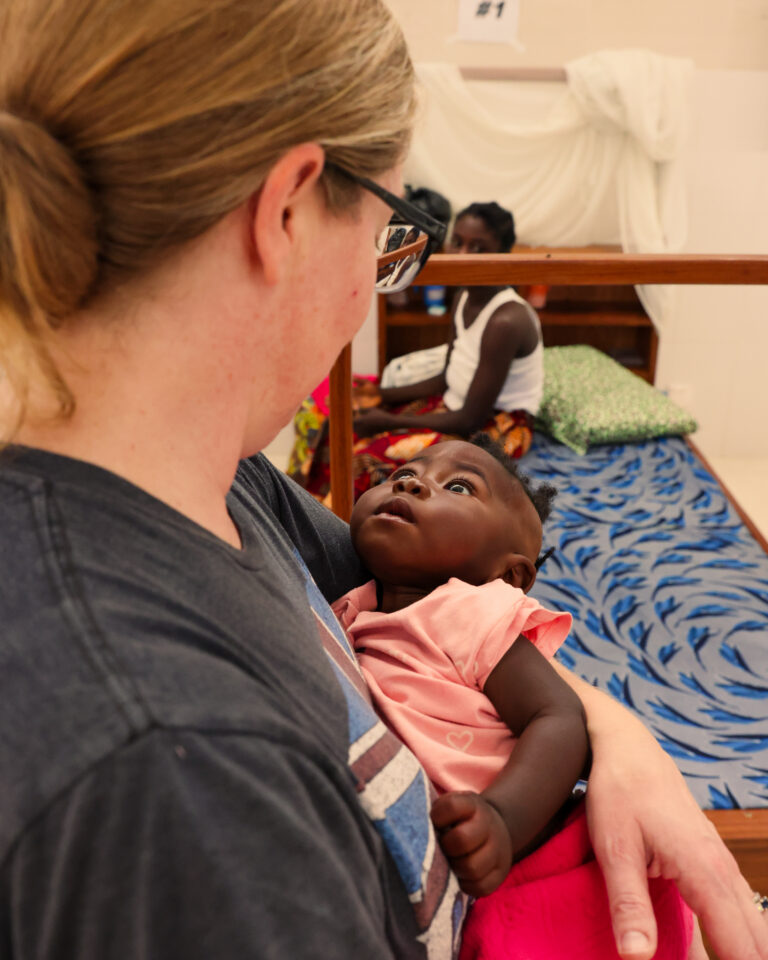
The road into Jesus Loves Me Children’s Center was thick with mud by the time June rolled around. The rains had come hard this year, and with them came the children, more of them than usual, carried in on the backs of mothers and grandmothers who had walked for hours, sometimes days, to reach the gate.
Some of these families were not even Liberian. They had crossed borders from Guinea and Sierra Leone, chasing rumors that somewhere on this stretch of road there was a hospital that would not turn a hungry child away. By the time they arrived, many of the children were dangerously thin, their small bodies worn down by malnutrition that had gone untreated for far too long.
It is a strange kind of encouragement, watching families travel so far for help. It means JLM’s reputation is spreading, that word of a place where children are cared for well has carried across borders. But it is also a heavy reminder. If families are willing to walk for days to reach one hospital, how many more children are out there who never make it at all? The scale of malnutrition in this part of West Africa is bigger than any single center, and June made that painfully clear.
The rainy season brought its usual companion too: malaria. As mosquitoes multiplied in the standing water, so did the caseload of children fighting the disease, many of them arriving severely anemic. This is where the blood bank became a lifeline. Over the course of the month, the team ensured that anemic children received the transfusions they needed, a quiet but critical piece of the puzzle that keeps children breathing through the worst of the season.
There was good news tucked into the hard numbers, too. Measles, which had been a persistent concern in recent months, finally began to ease. With fewer measles cases demanding attention, the staff found room to breathe and to focus on something just as important as treating illness: strengthening the quality of care itself.
And it was in June that JLM took a step that will shape its future for years to come. The hospital was formally entered into the national data system, meaning its activity now reports directly to Liberia’s Ministry of Health. It might sound like a small administrative detail, but it is not. It signals that JLM is being recognized as a full and legitimate partner in Liberia’s healthcare system, one whose data matters, whose outcomes are being tracked, and whose collaboration with other facilities can now grow stronger and more official.
Still, the numbers behind the struggle tell a story of relentless, faithful work. Over three thousand children came through the outpatient department in June alone. Nearly two thousand immunizations were given. More than one hundred new children began treatment for severe acute malnutrition, and forty eight walked away cured. Specialty clinics for sickle cell, asthma, epilepsy, congenital heart conditions, tuberculosis, and HIV all continued seeing children who, in many parts of this region, would have nowhere else to turn.
And in the middle of all the clinical work, something just as vital kept happening. Three hundred and twenty four families sat down and heard the Gospel clearly explained, and left with a Bible in hand. Forty six worship services filled the inpatient ward with song. Two hundred and twenty four children and caregivers received one on one prayer and spiritual support in what are often the hardest moments of their lives.
As the team looks forward, there is a shared sense of purpose that carries them into the next season. Every bit of that hope exists for the same reason the road into JLM stays muddy and well traveled. Because families keep coming, and because someone keeps showing up to meet them.
Be part of the next story
$38 a month cares for one child.
Join The Collective, and every month you'll hear what your gift did at the Jesus Loves Me Children's Center.