
A Miracle Named Miracle
Six-month-old Miracle was carried into Jesus Loves Me Children’s Center fighting for every breath.
She was breathing nearly 100 times a minute, more than twice the normal rate for a baby her age. She could not feed. She was gasping for air and her oxygen levels had dropped into the low 70s.
Our medical team immediately knew how serious this was. A loud heart murmur and fluid-filled lungs signaled heart failure and pneumonia. Her tiny body was overwhelmed.
Every moment mattered.
Oxygen was administered without delay. Nurses stayed at her bedside, monitoring every change.
Doctors began treatment immediately with antibiotics and diuretics, doing everything possible to remove the fluid filling her lungs. Oxygen was administered without delay. Nurses stayed at her bedside, monitoring every change; however, despite their efforts, Miracle was not improving.
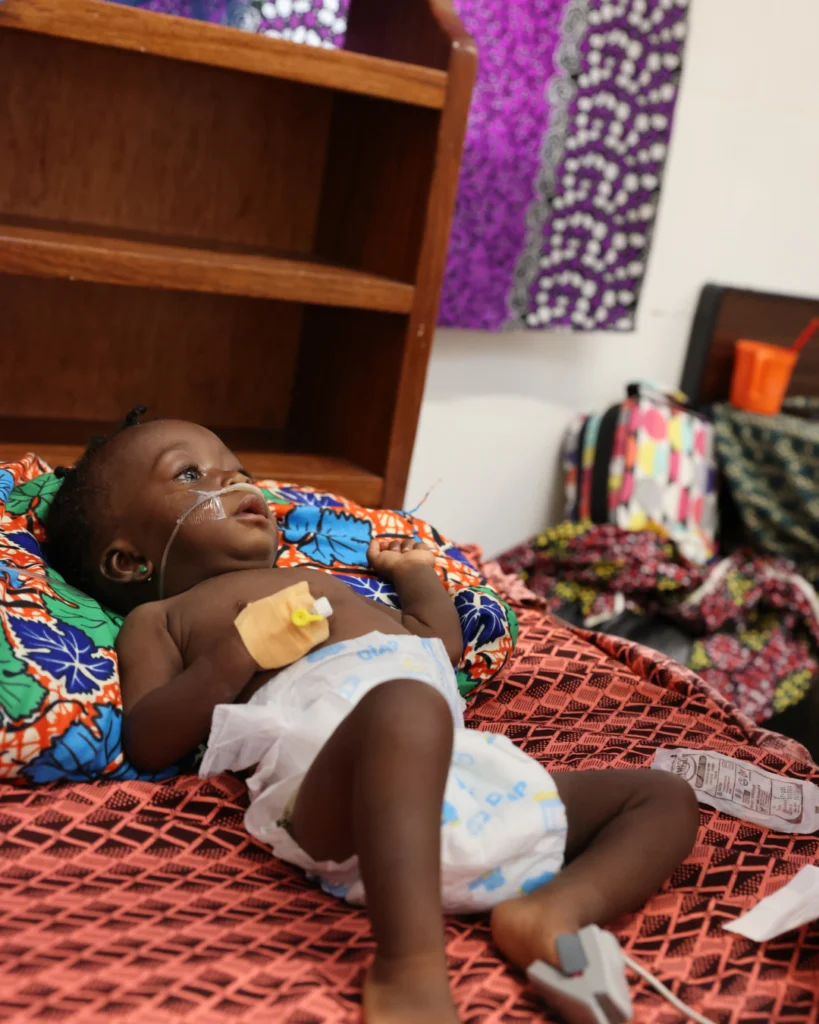
In the U.S. or U.K., a baby this sick would be placed on a ventilator connected to advanced life-support equipment. In Liberia, that option does not exist.
Instead, the team relied on what they did have.
They initiated CPAP powered by an oxygen concentrator and assembled a pressure system using tubing and a simple plastic mineral water bottle. The oxygen line was submerged into the bottle to create continuous pressure, helping force oxygen deep into her lungs.
It is not high-tech equipment. It is ingenuity born from necessity.
The steady pressure began pushing fluid out of her lungs. For days, Miracle was sustained by oxygen, medication, and relentless monitoring. Adjustments were made hour by hour. Progress was slow and uncertain.
But after two days, Miracle’s breathing began to slow. After four to five days on CPAP, along with fluids, antibiotics, and diuretics, her lungs started to recover. Just before Christmas, her breathing had stabilized enough to remove the CPAP and switch her to simple oxygen.
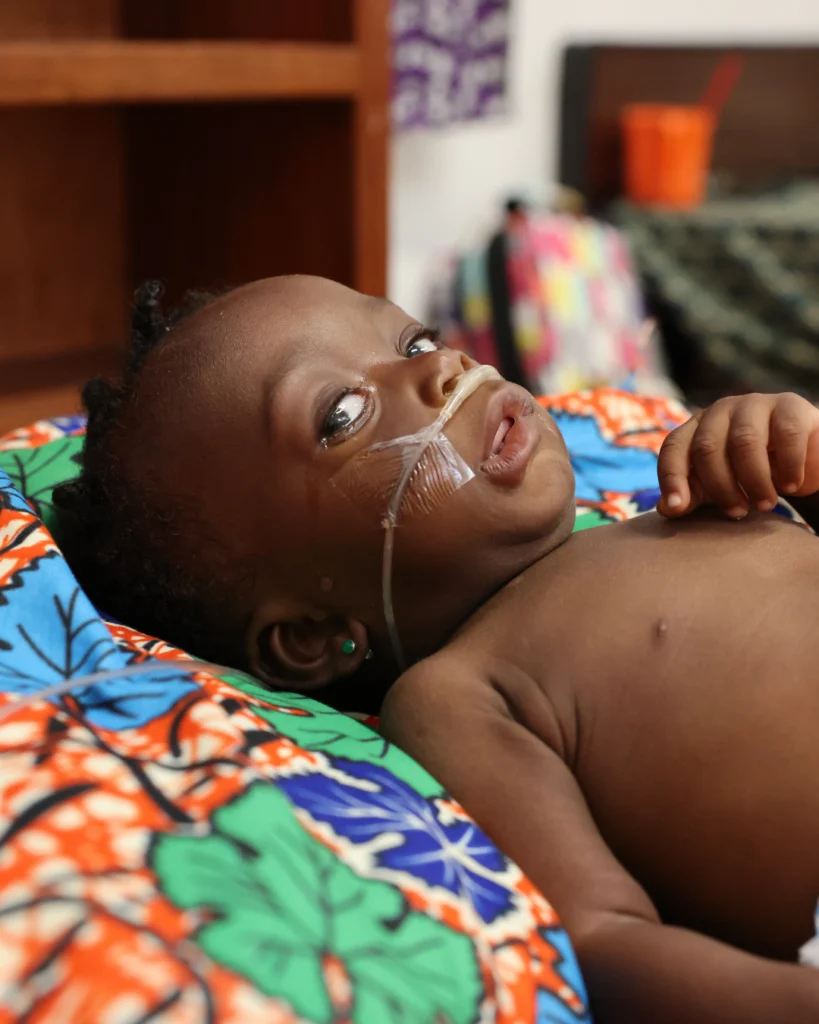
Miracle survived.
Today, she returns for ongoing heart evaluations. She has Down syndrome, which brings additional health challenges. But she has a future because critical care was available when her life depended on it.
That kind of readiness is not accidental.
Oxygen concentrators power treatments like the one that saved Miracle. Each unit costs about $1,000 and must be maintained in a setting where power is unreliable and resources are limited. These machines are not luxury equipment. They are the backbone of emergency care.
A plastic bottle can help create pressure.
But without oxygen, without trained staff, and without functioning equipment, there is no second chance.
Children arrive in crisis every week.
Your donation ensures that when the next child is carried through those doors, the team has what they need to respond immediately.
When breathing becomes a battle, preparation saves lives.